IN THE CONVERSATION
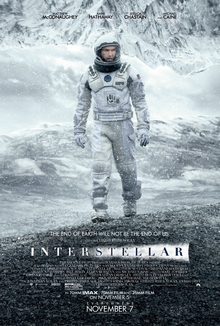
Interstellar
2014 · 169 min · Adventure / Drama / Science Fiction
An astronaut leaves his children behind to search beyond the solar system for a future home for humanity.
RELEASE DATENov 7, 2014
A FIRST LOOK
The trailer.
A trailer is not available here yet.
THE CLUB REVIEW
The distance between two messages
Interstellar’s most devastating special effect is a sequence of recorded messages. Relativity becomes a family problem when years of missed life arrive in a few minutes. The planetary images give that loss scale, but Matthew McConaughey’s face supplies its meaning. The final explanation asks for considerable emotional generosity, and the dialogue sometimes presses its themes too hard. Even so, the contrast between cosmic travel and ordinary parental absence makes the adventure unusually personal.
AFTER THE CREDITS




The dust gives the opening a texture I miss once we leave Earth. It makes the crisis domestic before the film starts measuring enormous distances.
The organ score sometimes overwhelms the dialogue, but I love how it makes space feel both sacred and mechanically threatening at once.
I find the ending less persuasive, but the family scenes hold it together.
The docking sequence is thrilling because the movement is so clear. You understand the alignment problem before anyone starts announcing what must happen.
TARS could easily have been a distracting joke machine. The blunt shape and adjustable humor make him feel like equipment that gradually becomes company.
Murph’s anger is essential for me. Without it, leaving home could look like uncomplicated heroism instead of a decision someone else must live with.
On the water planet every minute feels expensive.
The accumulated video messages affect me more than the space sequences.